Three leaders meet in Shenzhen
Trump, Xi, and Putin concluded a trilateral summit with brief talks and few concrete agreements on global security issues.
By Marco Ortega ·
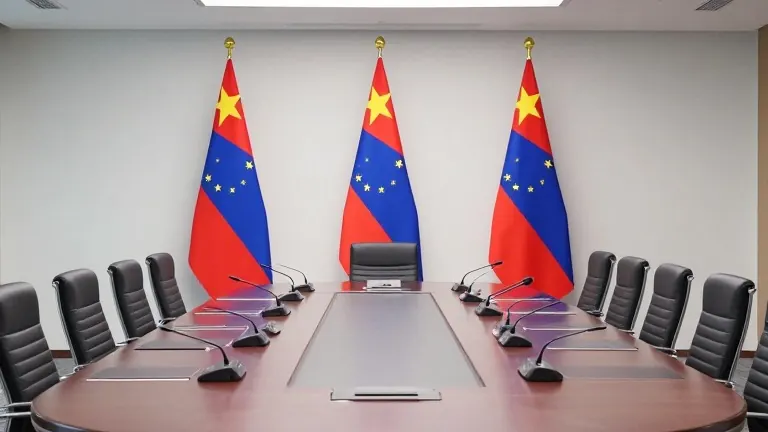
President Donald Trump sat down with Chinese leader Xi Jinping and Russian President Vladimir Putin in Shenzhen, China, on Thursday. The three men met for a trilateral summit that capped a two day conference. Their gathering marked the first time in American history that the U.S. president held a group session with the leaders of China and Russia.
The leaders offered broad statements about the need for great powers to maintain global stability. Xi told reporters that history shows the world is secure when major nations are at peace. He added that conflict among these powers leads to chaos. Putin agreed that their three nations could contribute to strengthening security in the world. Trump described the collaboration as a special responsibility and claimed they were making history.
Despite the warm rhetoric, the summit produced few specific policy outcomes. The three leaders arrived with different priorities. Trump wanted to discuss reducing nuclear weapons and preventing Iran from acquiring them. Putin pushed for an end to the war in Ukraine on terms favorable to Moscow. Xi preferred to keep the discussion general, focusing on economic stability and China's growing global influence.
The actual time spent in direct negotiation was limited. Trump and Putin spoke bilaterally for 42 minutes. Trump and Xi talked for about an hour. The full trilateral group session lasted one and a half hours. Much of this time was consumed by simultaneous translation. Trump displayed familiar charm during the meetings, calling Putin a friend and telling Xi that they would never have a problem as long as they remained in charge.
These comments implicitly acknowledged the short timeline of Trump's presidency. He has two years remaining in office. Democrats are scheduled to take control of Congress in January. The summit was first proposed by Putin during a phone call with Trump in October. The Russian leader hoped the meeting would signal that Western isolation of Russia over Ukraine was fading.
Subtle power dynamics were visible during the event. Xi personally greeted Trump on the tarmac, a gesture that mirrored Trump's welcome of Xi in Washington. Putin received a smaller delegation upon his arrival to Shenzhen. During the APEC group photo, Trump was positioned next to Xi. Putin sat at a separate table during the dinner reception. Xi and Putin spent two hours in private talks on Wednesday, their fiftieth meeting together.
Critics in Russia labeled the gathering a potential new Yalta, referencing the 1945 conference where major powers divided Europe. The Shenzhen summit reflected more fragmented priorities. Trump sought to include China in nuclear arms control talks. Beijing has repeatedly rebuffed U.S. attempts to join these negotiations, noting its arsenal is smaller than those of the U.S. and Russia. Putin hoped to secure support for a security map of Europe that would reduce NATO's presence in Eastern Europe. Xi insisted that Europe must have a seat at the table in any settlement.
The mood in Moscow was mixed after the summit. A Kremlin aide said Ukraine was the focus of Trump and Putin's discussions and that Putin left in an excellent mood. Hours earlier, Ukraine had struck the bridge connecting mainland Russia to Crimea for the third time in a week. The attack disabled the structure for months. The bridge is a key symbol of Russia's control over the annexed peninsula.