Montana Secretary of State Warns of High Ballot Rejection Rates Amid Court Ruling
Election officials are accepting absentee envelopes without birth years, but the state's top elections officer urged a precaution that contradicts the recent district court decision.
By Chinedu Schneider ·

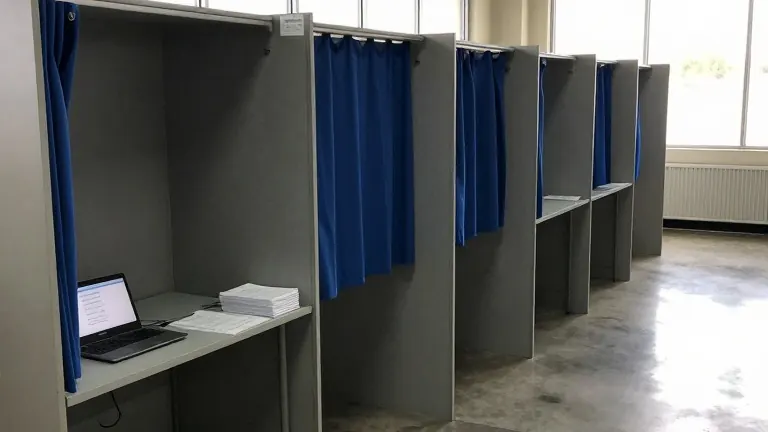
Montana’s top elections official warned county administrators on October 6 that absentee ballot rejection rates could reach historic highs. The email, sent by Sadie Dallaserra, the Elections and Voter Services Manager, cited confusion over a recent court ruling that struck down a state law. The law, House Bill 719, required voters to write their birth year on return envelopes. A district court judge ruled the requirement unconstitutional in late October, just as general election voting began.
The ruling ended a mandate that had already caused the rejection of thousands of ballots. In the November 2025 municipal elections, 1,814 absentee ballots went uncounted due to missing or incorrect birth year information. In the May school elections, 2,855 ballots were rejected, and 1,103 were rejected in the June primary. Before the law took effect in July 2025, the statewide rate for uncounted absentee ballots was half a percent.
The secretary of state’s office did not explicitly mention Judge Mike Menahan’s finding that the law was unconstitutional in the email. Instead, the message stated that judicial changes can evolve and that the ruling might be revisited. Dallaserra wrote that the state was surprised by the late Friday ruling and described the timing as particularly unexpected. She noted that the office had planned an extensive outreach campaign to remind voters to include their birth years, which is no longer possible.
Lewis and Clark County Elections Administrator Connor Fitzpatrick said the email created uncertainty. He understood from the communication that the court order might be appealed. He advised absentee voters to write their birth year on their envelopes just in case an appeal succeeded and the requirement returned. Fitzpatrick said the email warned that ballots without birth years could again be considered insufficient.
Trent Bolger, a plaintiff in the lawsuit who represents the advocacy group Big Sky 55+, criticized the state’s handling of the situation. He said the secretary of state’s office could have cleared up the confusion earlier. Bolger stated that the requirement undermined voter confidence by casting aside eligible ballots while adding nothing to security. He noted that the Montana Constitution protects the right to vote from such attacks.
Betsy Brandborg of Friends of the Third Branch, a group formed in 2023 to monitor judicial independence, called the email disrespectful. She said the matter was resolved and that the state lost the litigation. Brandborg argued that the state was engaging in political hyperbole by questioning the court’s decision. The secretary of state’s office has not responded to questions sent over two days regarding the email and the state’s intent to appeal.
County election officials are currently accepting ballots with or without a birth year on the return envelope. Gallatin County Clerk Bret Rutherford said he understood the order to apply to the current election with a possible appeal following. He had not read the full court order and was unaware that the judge found the requirement unconstitutional. Yellowstone County Elections Administrator Dayna Causby said her office will accept all ballots regardless of the birth year field. If the state appeals to the Montana Supreme Court, Causby said the county will follow those instructions.
The judge’s order enjoined Secretary of State Christi Jacobsen and the state from enforcing HB 719. The order was not limited to the 2026 general election. Menahan found that the law failed to demonstrate a legitimate state interest that outweighed the burden on voters. The state also failed to provide evidence that the requirement prevented election fraud or promoted public confidence in elections.
Source: Montana Free Press