Oregon climate hazards: Extreme heat and smoke days quadruple in 20 years
A new state report details the sharp rise in dangerous weather events and the gaps in federal funding that are leaving residents and health officials scrambling to adapt.
By Chinedu Schneider ·
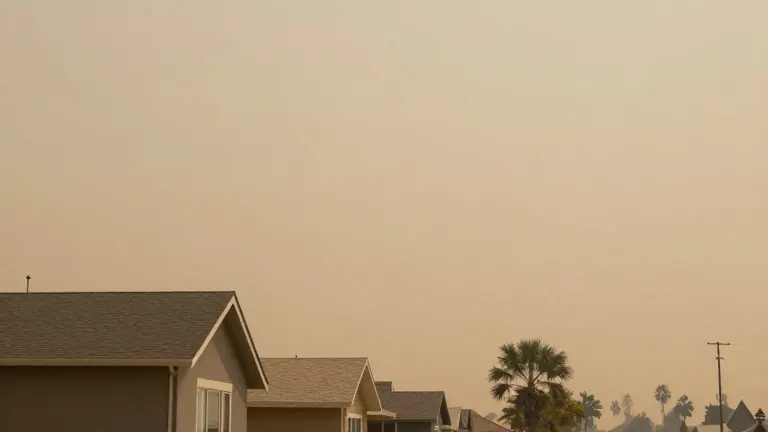
Oregon is experiencing four times as many days with both extreme heat and wildfire smoke as it did two decades ago, according to a new state report.
The Oregon Health Authority released its 2025 Climate and Health report on October 28. The document analyzes health trends linked to climate impacts across the state. It compares data from five-year periods, starting with 2006 through 2010 and ending with 2021 through 2025. The findings show a sharp increase in hazardous weather conditions.
In the 2006 to 2010 period, Oregon averaged 12 days of extreme heat per year. That number doubled to 22 days in the 2021 to 2025 period. Wildfire smoke days tripled from an average of 11 per year to 33. When both heat and smoke occurred simultaneously, the average rose from two days to nine days over the same timeframe.
Gabriela Goldfarb, the environmental public health manager at the Oregon Health Authority, described the trends as eye-opening. She noted that both heat and smoke affect multiple organs, including the heart and cerebrovascular system. The report identified 2025 as the state’s third warmest year since record keeping began in 1895. Early-season heat in June 2025 broke temperature records and contributed to a spike in heat-related illnesses.
The state recorded nine heat-related deaths in 2025. This figure reflects a trend of higher deaths since 2021. Southern, Central, and Eastern Oregon were among the areas most impacted by extreme weather, with rural communities hit the hardest. Ben Brint, senior climate program director at the Oregon Environmental Council, said the impacts are in full-on acceleration mode. He called for an all-hands-on-deck approach involving local health authorities, tribes, and community organizations.
The report highlights a growing anxiety among young people. A statewide health survey of 11th graders found that 71% experience stress about the future due to climate change. Nearly 40% said these feelings negatively affect their lives. The data shows that the state’s average temperatures have increased by 2.4 degrees Fahrenheit since 1970. Every year since 2000, except 2011, has been warmer than historical averages.
Oregon has lost millions of dollars in federal funding aimed at climate action. Lawmakers have not yet determined how to fill those gaps. The United Nations reports that the planet’s average temperature is estimated to climb by 5 degrees Fahrenheit this century. This projection is nearly double the increase countries promised to hold global temperatures to in international agreements.
Local programs are helping residents adapt to the changing climate. Kelly Juarez, who moved from Reno, Nevada, to Linn County two years ago, installed a new heat pump unit through the nonprofit Seeds for the Sol. The upgrade helped her and her daughter stay comfortable during hot days and reduced her energy bills. The Oregon Health Authority’s Healthy Home Grant has awarded nearly $25 million to 34 organizations. The program served 481 households across 25 counties between 2024 and 2025.
The Oregon Department of Energy also offers programs for heat pump installations. These programs have been so popular that they have exhausted available funding. Brint urged state and federal leaders to continue funding these existing programs. He stated that Oregon can lead the way by supporting the infrastructure that helps residents cope with a hotter climate.
The state is not currently on track to achieve its goals for reducing overall carbon emissions by mid-century. Despite this, the report indicates that targeted health interventions and energy efficiency upgrades are providing tangible benefits to Oregonians.
Source: KOPB-FM