Oregon road agency outlines three costly plans to fix funding gap
A state workgroup presented budget scenarios ranging from $644 million to $1.38 billion to address a projected $240 million deficit at ODOT.
By Chinedu Schneider ·
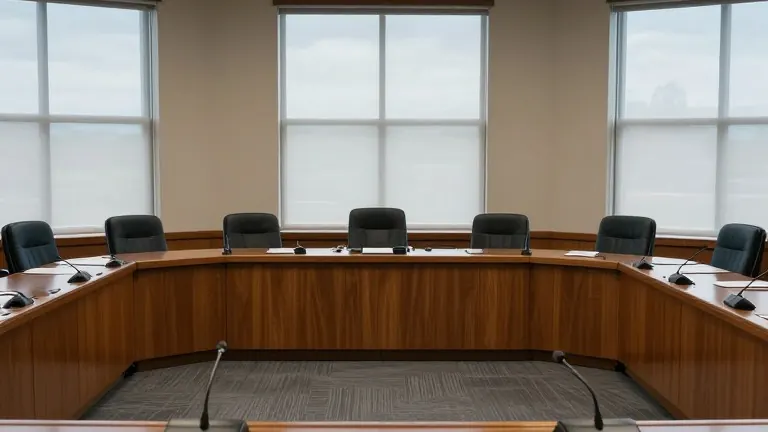
The Transportation Vision Workgroup convened in Salem on Thursday to review final recommendations for the Oregon Department of Transportation.
ODOT projects a $240 million budget shortfall for the 2027 to 2029 fiscal cycle. The agency attributes this gap to falling gas tax revenue and declining vehicle fees. Staff levels are currently at their lowest point since 1999, according to internal data shared with the group.
Grace Crunican, Co-Chair of the workgroup, described the meeting as a critical assessment of the state's physical infrastructure. She noted that the group is evaluating what is required to repair the transportation network. "We’re looking at the infrastructure in the state of Oregon, particularly the transportation infrastructure, and what it’s going to take to get it in shape," Crunican said.
The group approved three distinct investment scenarios during the session. The most conservative option requires an investment of $644 million. The second scenario costs $1.27 billion, while the third option totals $1.38 billion. The two higher-cost plans include dedicated funding for freight, bicycle, pedestrian, and rail systems. All three proposals will now be sent to the Governor’s office for review.
Current funding measures are temporary. Kevin Glenn, ODOT’s communications director, explained that the legislature redirected funds from programs and projects to maintain services and prevent layoffs for the current and next year. He warned that this financial arrangement ends at the close of next year. "But that redirection of funds wraps up at the end of next year," Glenn said.
This urgency follows the 2025 legislative session, where lawmakers failed to pass a comprehensive transportation funding package. Voters subsequently rejected most of the tax and fee increases in a scaled-down stopgap bill. Crunican stated that the legislature has not raised taxes for the road system since 2017. She argued that state leaders must collaborate on a long-term strategy to secure the economic future of the state.
If lawmakers do not identify a permanent fix, ODOT faces the prospect of further job cuts. Drivers in the state may also encounter rougher road conditions and increased delays or closures as the agency operates with fewer resources.