Waymo robotaxis involved in hit-and-runs at 2.4 times the county rate
Analysis of four years of Phoenix police data reveals nearly half of crashes involving the self-driving service result in the other driver leaving the scene.
By Chinedu Schneider ·
Waymo robotaxis are involved in police-reported hit-and-run accidents at a rate 2.4 times higher than that of human drivers in Maricopa County. An investigation by Arizona’s Family analyzed more than four years of police records in the Phoenix metro area to determine this figure. The study covered crashes from September 1, 2020, through December 31, 2024.
The analysis examined 88 police-reported crashes involving Waymo vehicles across five cities: Phoenix, Scottsdale, Chandler, Mesa, and Tempe. Of those incidents, 43 were classified as hit-and-runs where the Waymo vehicle remained at the scene and the other driver departed. This accounts for 49% of the total collisions recorded in the dataset.
Waymo roadside assistance personnel have expressed concern over the frequency of these departures. In one instance captured on body camera in March 2024, a specialist told a Chandler officer that it was "quite shocking how many people just take off." The officer, Seth Chavez, responded to a crash near Ray and Price roads where a driver had struck the rear of a driverless vehicle and driven away.
The company attributes the high rate of reported incidents to consistent internal reporting practices. In written responses, Waymo stated that while it appreciates the rigor of the research, it is difficult to determine if its vehicles are inherently involved in more hit-and-runs or if the company simply reports incidents more reliably than the general public. Camille Dredge, the company's senior director for ride-hail operations, noted that collisions are expected in any traffic environment.
Experts suggest that confusion over how to exchange information with a driverless vehicle is a primary factor. Phil Koopman, a professor emeritus at Carnegie Mellon University, observed that even police officers often struggle to interact with the cars. Missy Cummings, a professor at George Mason University, pointed to a 2022 Chandler police report where a driver held her license and registration in front of a Waymo, left the scene, and did not wait for a representative.
Another theory involves phantom braking, where the autonomous vehicle stops suddenly due to a perceived obstacle that is not present. Cummings stated that Waymos are hit from behind twice as often as the average human driver. She described these instances as real hallucinations where the car reacts to a non-existent threat. Koopman agreed that stopping is the tactically safe option when the system is unsure, but noted that following drivers often do not anticipate such sudden stops.
Waymo disputes that sudden braking is a major contributor to the hit-and-run rate. The company said rear-end crashes are common for both human and autonomous drivers. According to Waymo data, its vehicles were involved in 41% fewer rear-end crashes causing airbag deployment than human drivers over 270 million autonomous miles. The company also noted that its vehicles were fully stopped in 72% of rear-end crashes that deployed airbags.
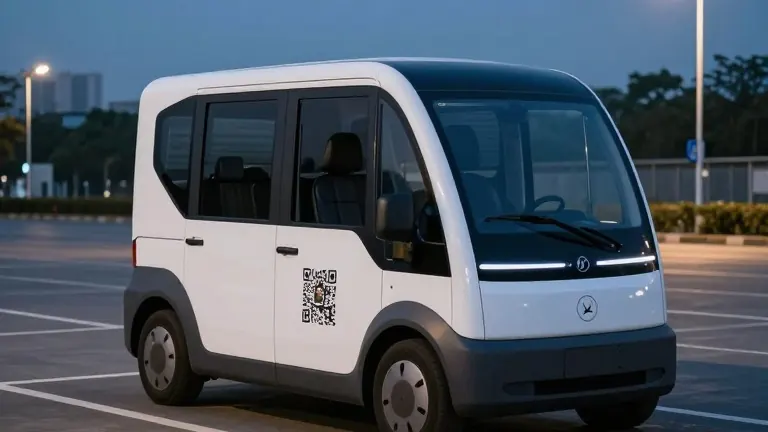
Arizona law requires drivers who hit an unattended vehicle to locate the owner or leave contact information. Waymo provides several methods for drivers to exchange data, including scanning a QR code on the driver's side door, using the company app, or calling a dedicated phone number. The company maintains that drivers do not need to wait for a roadside representative to arrive at the scene.
Waymo said it has driven more than 90 million fully autonomous miles in Phoenix. The company reported that its vehicles reduced crashes involving serious injuries or worse by 90% compared to human drivers. It stated that hit-and-runs are uncommon relative to the more than 4 million autonomous miles its vehicles drive each week across 15 U.S. cities.