70,000 Gaza Deaths Anchor Tight Israeli Knesset Race
Voters choose between Netanyahu's 19-year tenure and a challenge from Gadi Eisenkot in a contest for 120 seats.
By Marco Ortega ·
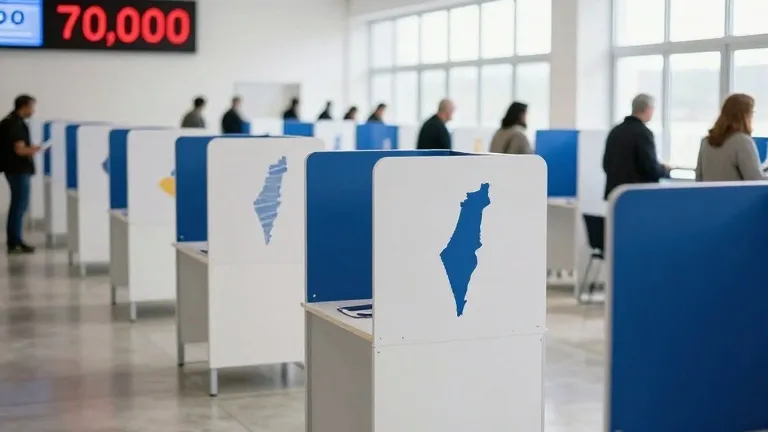
Israelis cast ballots on Tuesday in a race where the death toll in Gaza has become the central metric for judgment. More than 70,000 Palestinians have died in the conflict that began after the October 7, 2023 attacks. That number now frames a tight contest for the 120 seats in the Knesset, with polling showing pro-Netanyahu and anti-Netanyahu camps running nearly even.
The election pits Prime Minister Benjamin Netanyahu against Gadi Eisenkot, a former military chief who entered politics four years ago. Netanyahu has served as prime minister for 19 of the last 30 years. Eisenkot, whose party Yashar translates to straight or direct, campaigns on a platform of honesty and proposes term limits for the prime minister. At a rally in Modi'in, supporters praised his plain speaking style. Noa Sadeh, 56, said she wants a leader who will do the work rather than just talk.
The opposition bloc includes former prime ministers Naftali Bennett and Avigdor Lieberman, both from the nationalist right who previously allied with Netanyahu. On the far right, Yishai Fleisher of the Otzma Yehudit party argued in Bet Shemesh that Netanyahu drifts left. He advocated for more settlements in the West Bank and Gaza, a ministry to facilitate voluntary Palestinian departure, and the death penalty. Netanyahu's campaign countered with posters rhyming the right with Palestine, linking opposition leaders with parties representing the Arab minority, which constitutes about one-fifth of the population.
The campaign has been shaped by Netanyahu's record since the 2023 attacks. His war in Gaza has killed over 70,000 Palestinians, a third of whom Israel identifies as Hamas combatants. The conflict has not eliminated Hamas, and Iran's nuclear threat remains. Netanyahu also faces a corruption trial and fallout from the Qatargate affair. Oded Levi, who voted for Netanyahu in 2022, attended the Eisenkot rally and stated that the prime minister in office is responsible for the current state.
Media coverage has influenced voter perception. Channel 14, a pro-Netanyahu outlet, has kept opponents on the defensive. This week, host Yinon Magal called Eisenkot a Moroccan monkey, a slur that raised questions about the opposition's grasp of the political terrain. Eisenkot did not repeat the term at his rally, a move admirers viewed as restraint. Many liberal expatriate Israelis are flying home to vote, a group not fully captured by standard polls. Their participation could decide the result if the vote turns on a single seat.
The political atmosphere reflects a referendum on leadership rather than traditional left-right divisions. Netanyahu's base remains loyal despite warnings about the October 7 attacks. His allies claim intelligence chiefs kept him in the dark, a claim supporters say is unfounded. On Thursday, a state ceremony marked the 1995 assassination of Yitzhak Rabin. Netanyahu sent a low-ranking minister in his place. Yair Golan, a former general and leader of the Democrats, expressed optimism about forming a regional strategic process for security, avoiding the term peace process.
Cultural signals suggest a shift in public mood. A video of young Israelis singing Shir LaShalom at a Negev music festival circulated widely this week. The song was performed by Rabin before his assassination 31 years ago. For many voters, the full flights of expatriates returning to cast ballots indicate that the era of Netanyahu may be ending.
Source: The Guardian