Democrats Take Control, Markets Watch AI
Economic experts predict legislative gridlock, while concerns over data centers and Iran policy drive immediate market reactions.
By Bianca Shevchenko ·
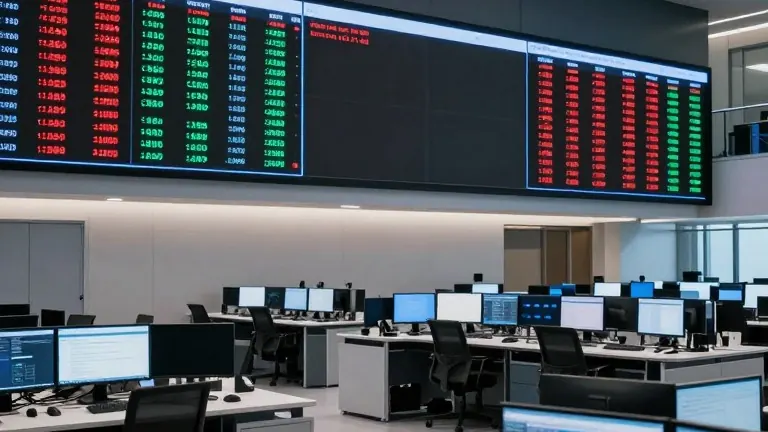
US equity markets and the dollar declined slightly following the midterm election results, signaling a cautious investor response to the political shift. The Democrats secured majorities in both the Senate and the House of Representatives, setting the stage for a divided government with President Donald Trump remaining in the White House for two more years.
Stephen Brown, chief North America economist at Capital Economics, noted that the immediate policy outlook remains stable because the Democrats lack the 60 votes needed to overcome a filibuster in the Senate. He stated that President Trump’s veto power effectively blocks most new legislation from passing.
Jacob Funk Kirkegaard, a senior fellow at the Peterson Institute for International Economics, predicted two years of complete legislative standstill. He argued that the split control of Congress and the presidency creates a dynamic where few bills can pass into law without major bipartisan compromise, which he sees as unlikely.
A primary area of concern for investors involves artificial intelligence and data center construction. Many Democratic candidates won in districts with high levels of local opposition to new data centers, which serve as critical infrastructure for AI development. Kirkegaard said this voter sentiment suggests the political support for rapid AI expansion is weaker than previously assumed.
He added that local resistance may slow the physical expansion of data centers, potentially affecting the valuations of major technology companies. While the Democrats may not immediately regulate the industry, the shift in public opinion creates hurdles for future construction projects.
If the Democrats win the presidency in 2028, Brown said they could pursue more aggressive changes. This would include raising taxes on corporations and high earners, as well as implementing regulations that might delay the deployment of new AI tools.
Tariff policy remains a central economic issue. A Pew Research Center poll from early October found that 56% of Americans view Trump’s tariffs as having a mostly negative impact on the country, compared to 20% who see them as positive. This sentiment helped drive Democratic victories in export-heavy states like Texas, Michigan, Iowa, and Illinois.
Deborah Elms, head of trade policy at the Hinrich Foundation, said Trump is unlikely to moderate his stance. She expects him to continue his current trade disruption strategies for the remainder of his term. Although Congress holds the constitutional power to manage tariffs, existing laws allow the president to impose them during national security or economic emergencies.
Congress can now use legal action to limit the expansion of current tariffs, even if it cannot easily repeal them. Trump told the Financial Times that he is unlikely to escalate the conflict with Iran. He also stated that he intends to work with the new Democratic Congress.
Kirkegaard said a deal with Iran is now the most critical economic step to lower gas prices and address cost-of-living concerns. George Saravelos, an analyst at Deutsche Bank, noted that markets are pricing in a reduction of risk regarding energy supply disruption as oil flows through the Middle East recover.
The new congressional leadership also brings the possibility of increased oversight. Voters expressed strong concerns about corruption and personal enrichment by the administration. This creates a path for the new Congress to launch legal investigations or pursue impeachment, a scenario that could force the president to negotiate on economic terms to secure political support.
Kirkegaard suggested that a small number of Republican senators might join an impeachment vote if corruption evidence is overwhelming. Such a move could pressure the president to abandon many of his tariff measures to maintain political survival. The new Democratic leaders face a challenging task in reversing established policies despite their mandate.
More Business · Consumer Alerts · Report a business · Got a Story?