Iran War Dominates Midterm Ballot as Voters Weigh Economic Costs
As polls open, the conflict with Iran has become a central issue, with both parties citing the war's impact on prices and national security to rally supporters.
By Marco Ortega ·
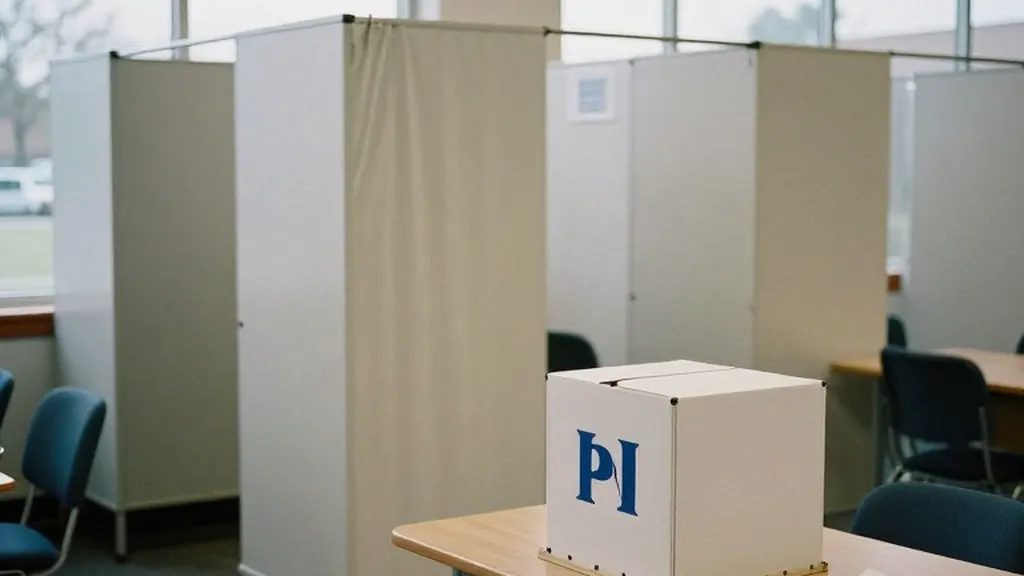
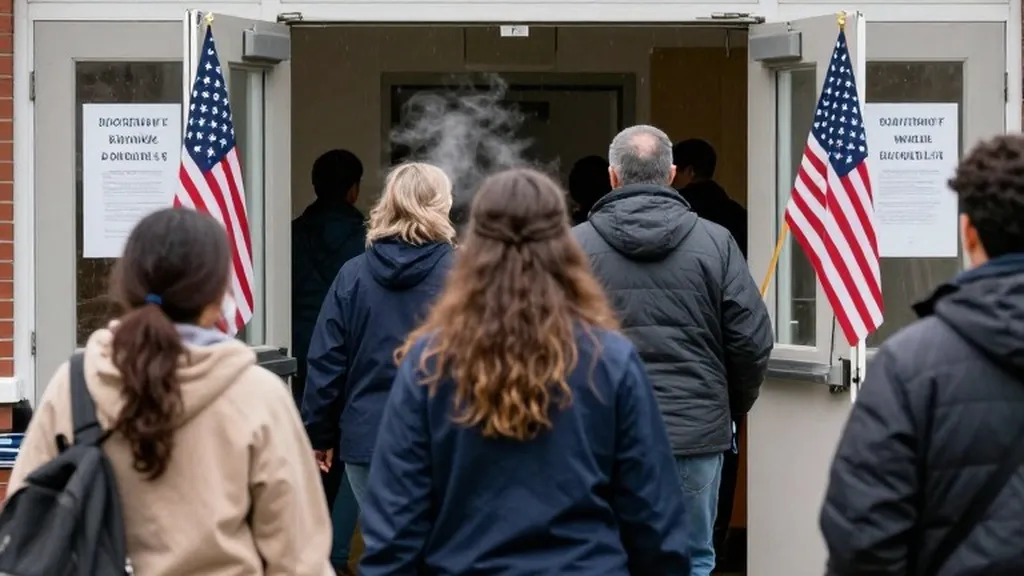
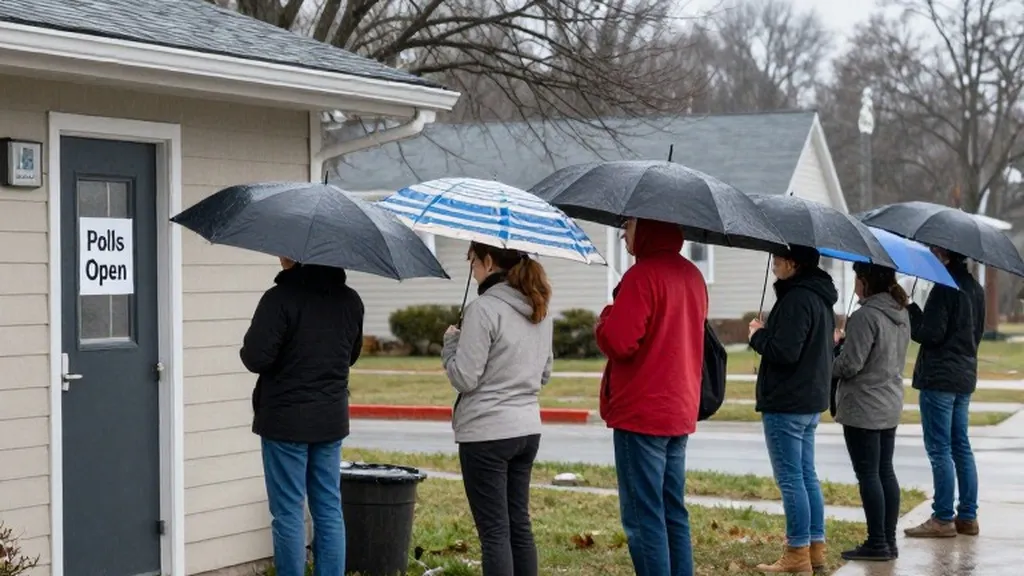
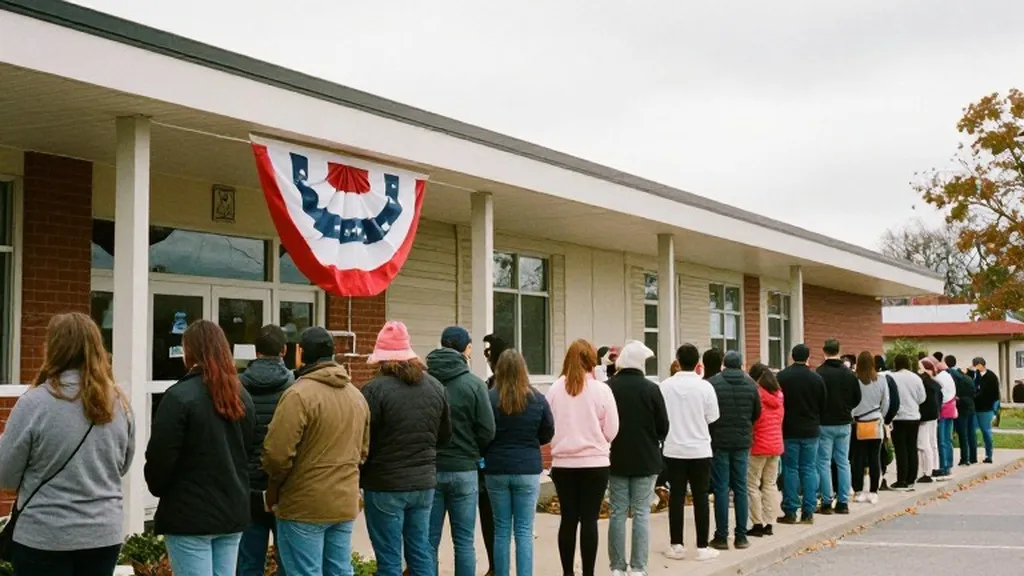
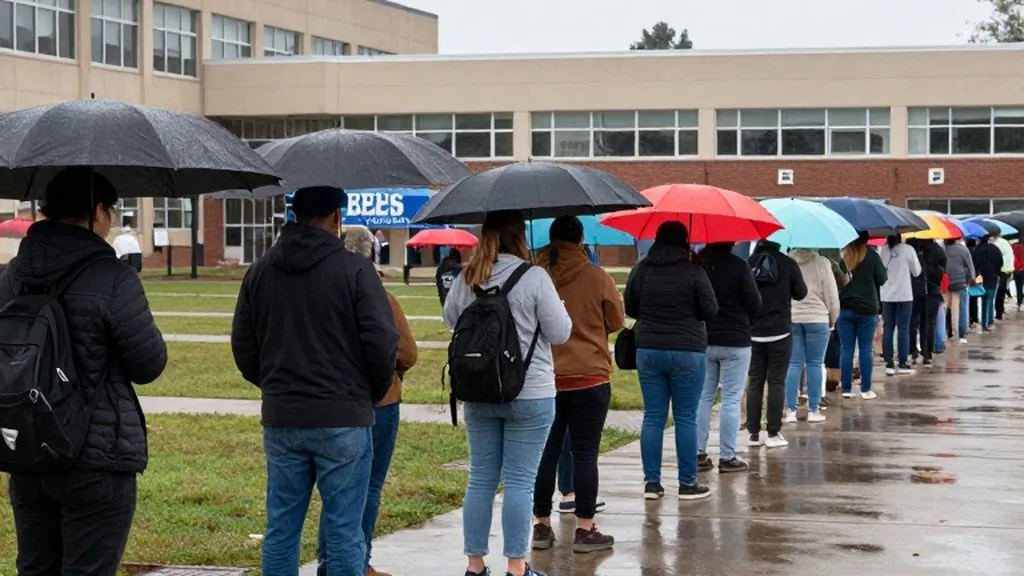
Voters across the United States cast their ballots on Tuesday, November 3, 2026, in a midterm election that has been heavily influenced by the ongoing war with Iran. The Associated Press describes the day as a referendum on President Donald Trump's second term, noting that many citizens are struggling with high prices and are angry over the unpopular conflict. This sentiment appears to have shifted the traditional midterm dynamics, making the war a primary driver of voter decision-making in key battleground states.
The economic toll of the conflict is a central theme in campaigns on both sides. Polling data from the AP and NORC indicates that only 25% of U.S. adults approve of the president's handling of the economy, while about 7 in 10 believe the country is heading in the wrong direction. Most respondents blame the president for high prices, a narrative that Democratic leaders have leveraged to argue that a change in control of Congress is necessary to address the cost of living. Democratic Congressional Campaign Committee Chair Rep. Suzan DelBene stated that the American people are angry and want change, framing the election as a response to financial strain.
Republican strategists, however, argue that the war has strengthened national security and that the economic challenges are temporary. National Republican Committee Chairman Joe Gruters emphasized that everything depends on turnout, asserting that if their voters participate, they will win. The party has focused on maintaining Senate control, a goal that requires losing no more than two seats. Republicans are bracing for potential losses in the House, where they can afford to lose no more than two seats to maintain their majority, but they view the Senate as the more critical chamber for legislative power in the president's final two years.
The war has also influenced specific Senate races, particularly in states where the conflict has had a direct impact on local economies. In Maine, a state that has become competitive due to economic strain and tariffs, Democratic former state Senate President Troy Jackson is challenging Republican Sen. Susan Collins. The Associated Press notes that the AP's reporting highlights how the war's economic ripple effects have made this race a toss-up according to multiple race ratings. Similarly, in Kansas, a reliably Republican state, the war has become central to the fight for Senate control as voters weigh the costs of the conflict against the benefits of strong leadership.
In the House, all 435 seats are up for grabs, with Democrats needing a net gain of three districts to take control. The war has served as a rallying point for Democrats in districts that voted for President Trump in 2024, particularly in the 21 districts where this occurred. These voters are now being courted by Democratic challengers who argue that the conflict has exacerbated inflation and raised the cost of everyday goods. Republican incumbents in these districts are working to distance themselves from the war's economic negatives while emphasizing their support for the president's foreign policy goals.
Beyond the war, the election features a complex landscape of redistricting and new congressional maps in six states: California, Florida, Missouri, North Carolina, Tennessee, and Texas. These changes may alter the outcome of the war-driven voting trends, as new districts may not vote as predicted based on historical data. The AP notes that while Republicans tried to beat the midterm pattern through redistricting, the impact of the war on voter sentiment could override these structural advantages. The new maps in Florida and elsewhere are expected to be closely watched as they may determine the final balance of power in Congress.
Money has played a significant role in shaping the narrative around the war. The 2026 elections are likely to be the most expensive in history, with Republican committees outraising and outspending their Democratic counterparts. However, at the candidate level, Democrats have outraised their opponents, allowing them to air more ads focused on the economic impact of the conflict. Analysis of AdImpact data shows that 88.1% of Republican general election TV ad spending went to states and districts Trump won in 2024, including more than $850 million in areas where he won by 10 points or more. This strategy aims to consolidate support in red states where the war is seen as a success.
The administration has also faced scrutiny over its handling of election administration, with a federal judge temporarily barring a plan to prevent noncitizen voting on Monday. Critics argue this move risks disenfranchising eligible voters, while supporters say it ensures the integrity of the election. The Justice Department has threatened to prosecute local election officials, a move that Democrats fear could intimidate voters. Meanwhile, the U.S. Postal Service has added hours and staff to ensure mail ballots are counted on time, a critical step given the high volume of early voting that surpassed the four-year-ago mark in many states.
Voters at the polls have expressed mixed feelings about the war's impact on their lives. Mark Barker of Palm Beach Gardens, Florida, said he has been following Trump the whole time and thinks he is doing an awesome job, reflecting the support base that remains loyal to the president's foreign policy. In contrast, James Moore, a 57-year-old librarian in Raleigh, North Carolina, stated that he is paying more for taxes, healthcare, and everything else, highlighting the economic grievances that are driving the Democratic message. These individual stories encapsulate the broader national debate over whether the war has strengthened the nation or drained its resources.