Supreme Court clears way for border wall in Big Bend National Park
The high court ruled that a federal judge lacked the authority to halt construction, allowing the Department of Homeland Security to resume building barriers in the rugged Texas desert.
By Marco Ortega ·
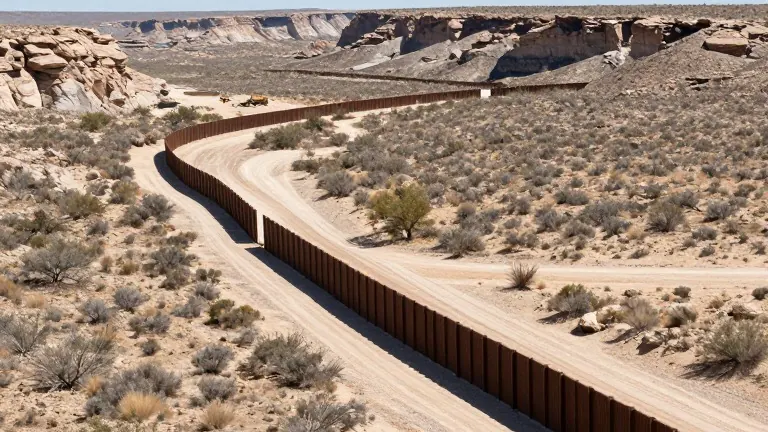
The U.S. Supreme Court issued a ruling on Monday that permits the Trump administration to resume construction of border infrastructure in west Texas, specifically within Big Bend National Park. The decision removes a temporary legal barrier that had paused work on 30-foot steel walls, patrol roads, and surveillance systems. The court’s action allows federal contractors to return to the site while a full court hearing on the matter proceeds.
In a five-page unsigned opinion, the justices determined that the federal judge in El Paso who originally issued the injunction did not have the authority to interfere with the project. The court stated that the blockage prevented the government from pursuing its compelling interests in border security. Justice Ketanji Brown Jackson was the sole dissenter in the ruling. The majority opinion emphasized that federal law grants the Secretary of Homeland Security, Markwayne Mullin, the power to waive specific environmental protections to prioritize rapid border construction.
The legal dispute began when the Center for Biological Diversity, a local nonprofit, and a private landowner filed suit. They argued that the Department of Homeland Security’s plans were unconstitutional and would cause irreparable harm to the region. The lawsuit challenged the construction of infrastructure in an area known for its canyons and desert terrain. Laiken Jordahl of the Center for Biological Diversity described the decision as a signal for bulldozers to return, warning of damage to canyon walls and pristine desert land.
The administration sought emergency relief from the Supreme Court in late October. Solicitor General John Sauer characterized the lower court’s injunction as baseless and argued that a gap in the barrier would become a funnel point for crossings. The government contended that the lack of defenses in the Big Bend region would act as a magnet for cartels and other actors. They framed the waiver of environmental laws as a necessary step to maintain the integrity of the border.
The project has drawn criticism from both political parties due to the location. Critics point to the region’s history of low crossing numbers, noting that the Big Bend Sector covers nearly 500 miles of the U.S.-Mexico border but regularly records the fewest encounters along the Texas border, according to U.S. Customs and Border Protection data. Opponents worry that the construction threatens the local tourism economy, Indigenous sites, and wild animal populations in the unforgiving desert heat.
The Supreme Court’s decision stands on the procedural authority of the lower court rather than a final judgment on the merits of the environmental claims. The ruling allows the Department of Homeland Security to proceed with its plans while the legal battle continues in the court system. The construction of the security infrastructure in the park is now authorized to move forward under the current federal framework.