ANC vote share falls to 31 percent in South African municipal elections
The governing party lost control of Johannesburg and Pretoria, while the Democratic Alliance expanded its urban footprint.
By Marco Ortega ·
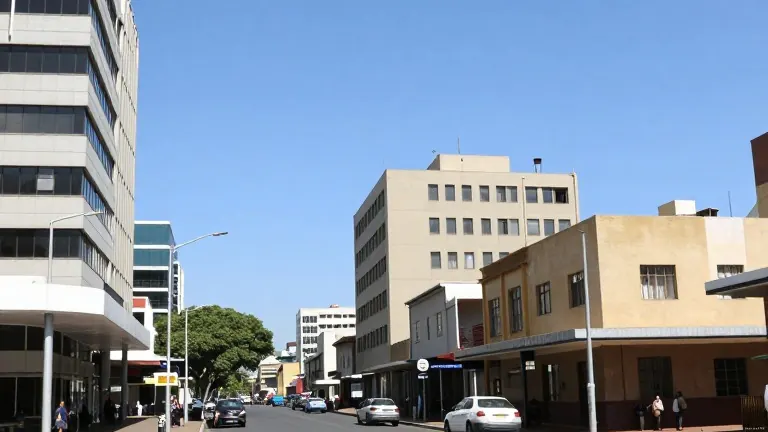
The African National Congress secured 31 percent of the vote in South African local government elections held on Wednesday.
This result marks the party's lowest share in the history of these municipal contests. The figure represents a drop from the 46 percent recorded in 2021 and is less than half of the 66 percent obtained in 2006. The outcome confirms a continued decline in support for the party that led the country out of apartheid.
Fikile Mbalula, the Secretary-General of the ANC, described the results as catastrophic. President Cyril Ramaphosa, who serves as both head of state and party president, called on political rivals to approach coalition talks with humility. He stated that public interests must take priority over internal disputes.
The Democratic Alliance won approximately 25 percent of the total vote. The party reported that its internal modeling indicates it secured the support of more than one million Black South Africans for the first time. The DA viewed this as a step toward shedding its historical reputation as a party representing white interests.
In major urban centers, the ANC lost its position as the largest party to the DA. These losses included Johannesburg, the economic hub, and Pretoria, the capital city. The DA also retained control of Cape Town, the country's second-largest city, and gained ground in the Ekurhuleni municipality east of Johannesburg.
No single party achieved a majority in many municipalities, requiring the ANC and DA to negotiate with smaller parties to form local governments. These negotiations must be concluded within 14 days before city councils are officially constituted. The DA indicated a preference for coalitions with parties committed to clean governance and the rule of law, potentially avoiding an agreement with the ANC.
Analysts attributed the voting pattern to frustration over corruption and service delivery. Ralph Mathekga, a political commentator, said the vote showed that voters now view the ANC as the chief culprit in the country's problems rather than the solution. Sipho Seepe, a political analyst, described the result as a personal rebuke of President Ramaphosa, citing the Farmgate scandal and persistent criticism of his economic record.
More Politics · World news · Report a business · Got a Story?