Supreme Court Weighs North Dakota Case on Pipeline Eminent Domain Fees
Landowners won a takings case but face $380,000 in legal costs, setting a stage for a ruling on federal versus state authority.
By Chinedu Schneider ·
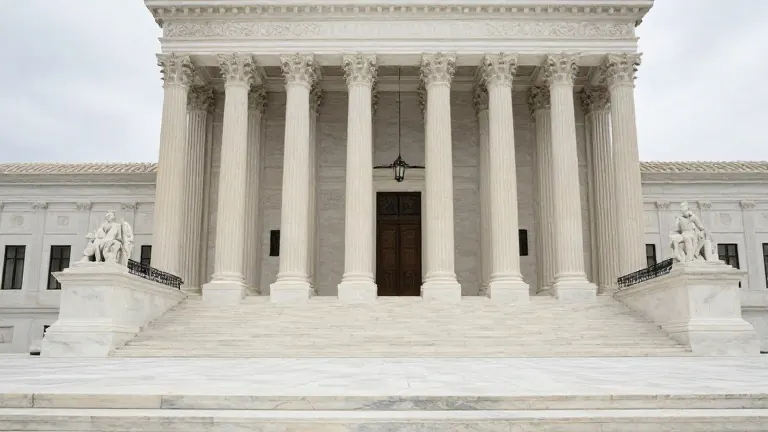
Landowners across the United States may face higher financial risks when the government seizes their property, depending on how the U.S. Supreme Court rules in a case originating from North Dakota. The dispute centers on whether private companies acting under federal eminent domain power must pay legal fees to landowners when a state law requires it.
The Constitution mandates that the government pay owners when it takes land. In this specific instance, a pipeline company working for the government offered less than the landowners believed was fair. After a multi-year legal battle, the landowners won the case. However, they were left responsible for $380,000 in legal fees.
North Dakota state law dictates that the pipeline company should cover those costs. The federal government argues that federal law overrides this state requirement. Bob McNamara, representing the landowners, argued the case before the justices on Monday.
McNamara stated that private companies wielding eminent domain must respect state laws designed to protect private property. He emphasized that this applies even when those companies are acting on behalf of the government.
Several justices displayed skepticism toward that position. Justice Ketanji Brown Jackson noted that federal law typically applies to federal condemnation actions unless Congress explicitly says otherwise. She argued that federal law should be the governing rule in such disputes.
The Court has not yet issued a final decision. The outcome will determine if state protections for legal fees survive when federal agencies direct private companies to take land.